
5S training, rooted in lean management, transforms workplaces by promoting organization, efficiency, and continuous improvement. Through sorting, setting in order, shining light, standardizing, and sustaining, organizations reduce clutter, enhance visibility, streamline processes, and increase productivity. Implementation leads to significant cost savings, defect rate reductions, and improved operational efficiency, as evidenced by substantial production output increases within short periods. Effective integration requires management commitment, employee engagement, regular audits, and feedback loops for sustained success.
In today’s competitive business landscape, efficient operations are a cornerstone of success. Navigating complex processes and cluttered workplaces can hinder productivity, leading to costly inefficiencies. This is where a streamlined approach becomes indispensable. The 5S training methodology, rooted in lean management principles, offers a robust solution for workplace organization and continuous improvement. By focusing on sorting, setting in order, shining a light, standardizing, and sustaining, organizations can achieve remarkable efficiency gains. This article delves into the art of process streamlining, exploring how 5S training empowers teams to master their workflows, enhance productivity, and foster a culture of consistent excellence.
- Understanding the Foundation: Introduction to 5S Training
- Implementing Lean Management Principles for Optimal Workflow
- Mastering Workplace Organization: Techniques for Efficient Processes
- Continuous Improvement Through Standardized Process Review
Understanding the Foundation: Introduction to 5S Training

The foundation of any successful process streamlining approach lies in comprehensive workplace organization and continuous improvement, principles deeply rooted in lean management methodologies. Among various tools at a manager’s disposal, 5S training stands out as a powerful catalyst for enhancing efficiency and productivity. This systematic approach, originally developed in Japan, revolves around sorting, setting in order, shining a light (on work areas), standardizing processes, and continually improving—a framework known as the 5S methodology.
5S training transcends mere workplace organization; it fosters a culture of quality and respect for resources. The process begins with sorting, where every item is evaluated for its purpose and value, leading to the removal of unnecessary objects. This initial step not only improves aesthetics but also clarifies workflow. Following this, setting in order involves organizing essential tools and materials within easy reach, streamlining tasks and reducing waste of time and energy. Illuminating work areas, or “seikai no kenshou,” underscores the importance of visibility, ensuring every element contributes to productivity without becoming a hindrance.
Standardization comes into play through consistent application of processes, making it easier for workers to understand and follow procedures. This leads naturally to continuous improvement, where regular reviews identify opportunities for refinement, further enhancing efficiency. Data from companies implementing 5S training indicates significant improvements in productivity, reduction in defect rates, and shorter cycle times. For instance, a manufacturing facility adopting 5S principles saw a 20% increase in production output within six months.
To integrate 5S training effectively, managers should initiate the process with clear goals and active employee engagement. Regular audits and continuous feedback loops ensure the system remains dynamic and responsive to evolving needs. By embracing this lean management approach, organizations can achieve higher levels of workplace organization, streamline processes, and foster a culture committed to ongoing improvement.
Implementing Lean Management Principles for Optimal Workflow
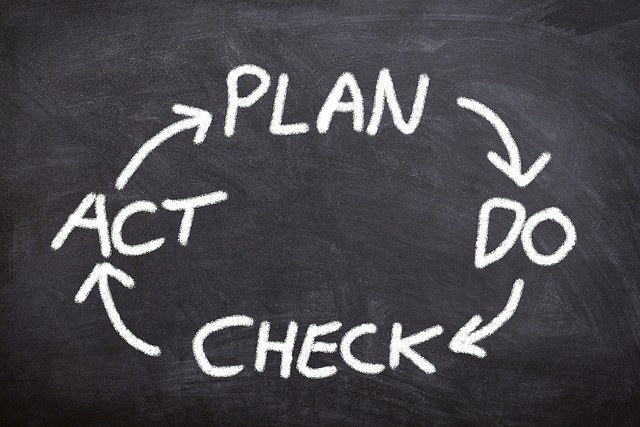
The implementation of Lean Management principles offers a powerful strategy for optimizing workflow within any organization. At the heart of this approach lies a deep commitment to workplace organization and continuous improvement, guided by methodologies like 5S training—a system that promotes order, cleanliness, and efficiency through five fundamental elements: Sort, Set in Order, Shine (Clean), Standardize, and Sustain. This structured framework not only enhances productivity but also fosters a culture of quality control and employee engagement.
For instance, consider a manufacturing facility adopting 5S principles. By sorting and discarding unnecessary items, setting up workstations according to specific standards, and regularly cleaning and inspecting equipment, the workplace becomes more streamlined and safe. This process standardization naturally lends itself to continuous improvement initiatives, where data-driven insights enable further refinement of processes over time. For example, tracking production times and identifying bottlenecks can reveal opportunities for process reengineering, leading to increased efficiency and reduced waste.
Effective implementation requires a multifaceted approach. Management must prioritize 5S training for all employees, ensuring that everyone understands their role in maintaining an organized workspace. Regular audits and feedback sessions reinforce these practices and encourage ongoing participation. Moreover, integrating 5S principles with lean management tools like value stream mapping can provide a holistic view of operational inefficiencies, enabling organizations to make data-backed decisions that drive substantial improvements in workflow and overall productivity.
Mastering Workplace Organization: Techniques for Efficient Processes

Mastering workplace organization is a cornerstone of any successful business strategy. Efficient processes not only enhance productivity but also foster a positive work environment. A proven approach to achieving this is through the implementation of 5S training and lean management principles. 5S, an acronym for Sort, Set in Order, Shine, Standardize, and Sustain, is a systematic method for workplace organization that has its roots in Japanese manufacturing practices. This technique involves sorting items into keeping only what is essential, setting them in a logical order, shining a light on visibility to prevent clutter, standardizing processes, and sustaining the system through continuous improvement.
Lean management, an evolution of 5S, emphasizes eliminating waste and maximizing value. By applying these principles, organizations can streamline their processes, reduce downtime, and enhance overall efficiency. For instance, a manufacturing plant might employ 5S to organize its shop floor, reducing time spent searching for tools and parts. This not only improves productivity but also ensures that employees can focus on high-value tasks. Data from studies shows that companies adopting lean management practices can achieve significant cost savings—up to 20% in some cases—by minimizing waste and optimizing resource utilization.
Practical implementation starts with a comprehensive 5S training program. This involves educating all levels of employees about the five principles and involving them in the process of organizing their workspace. For example, a retail store could conduct 5S training to organize its inventory management system, ensuring that products are easily accessible and visible. Standardizing processes through documentation ensures consistency and makes it easier for new employees to onboard quickly. Regular audits and continuous improvement initiatives reinforce these gains over time.
In essence, mastering workplace organization is not a one-time event but an ongoing process. By integrating 5S training and lean management into the organizational culture, businesses can naturally achieve process standardization and continuous improvement. This approach not only enhances operational efficiency but also promotes a more engaged and satisfied workforce, ultimately contributing to long-term success.
Continuous Improvement Through Standardized Process Review

In today’s competitive business landscape, continuous improvement is not just a strategy but a necessity for organizations aiming to stay ahead of the curve. One powerful approach to achieve this is through standardized process review, which forms the backbone of lean management principles and 5S training methodologies. By systematically analyzing workflows, businesses can identify inefficiencies and bottlenecks, leading to streamlined operations and enhanced productivity. The 5S framework—Sort, Set in Order, Shine, Standardize, Sustain—serves as a robust tool for workplace organization, enabling employees to maintain an orderly, clean, and standardized environment that promotes efficiency and quality.
For instance, a manufacturing company adopting 5S continuous improvement practices might start by sorting through its inventory, discarding obsolete items and organizing the remaining stock according to ease of access. The subsequent steps would involve setting each work area in order, ensuring every tool and component has its designated place. Shining involves cleaning and inspecting equipment regularly to prevent maintenance issues. Standardization is achieved through detailed process documentation and training, enabling consistent application across the board. Finally, sustenance comes from regularly reviewing and refining these practices, fostering a culture of continuous learning and improvement.
Data from various industries indicates that implementing lean management techniques can lead to significant cost savings and increased productivity. A study by McKinsey found that companies adopting lean principles experienced an average 12% increase in operating profit margins within two years. Moreover, standardized processes facilitate better resource allocation, reduce waste, and minimize errors, contributing to a more robust and agile organizational structure. To translate these insights into action, organizations should start with a comprehensive assessment of their current processes, identify key areas for improvement, and invest in 5S training for all staff members. Regular audits and continuous feedback loops are essential to maintain momentum and adapt practices as the organization evolves.
By integrating the principles of 5S training, lean management, and workplace organization, businesses can significantly enhance their operational efficiency. The article’s key insights underscore the importance of a systematic approach to process streamlining, where continuous improvement through standardized review is the cornerstone. Implementing these strategies not only optimizes workflow but also fosters a culture of excellence and adaptability. Moving forward, organizations should prioritize 5S continuous improvement initiatives, ensuring every step aligns with lean management practices for sustained success and enhanced productivity in today’s competitive landscape.